· By Editorial Team
Automotive Performance Parts for Beginners
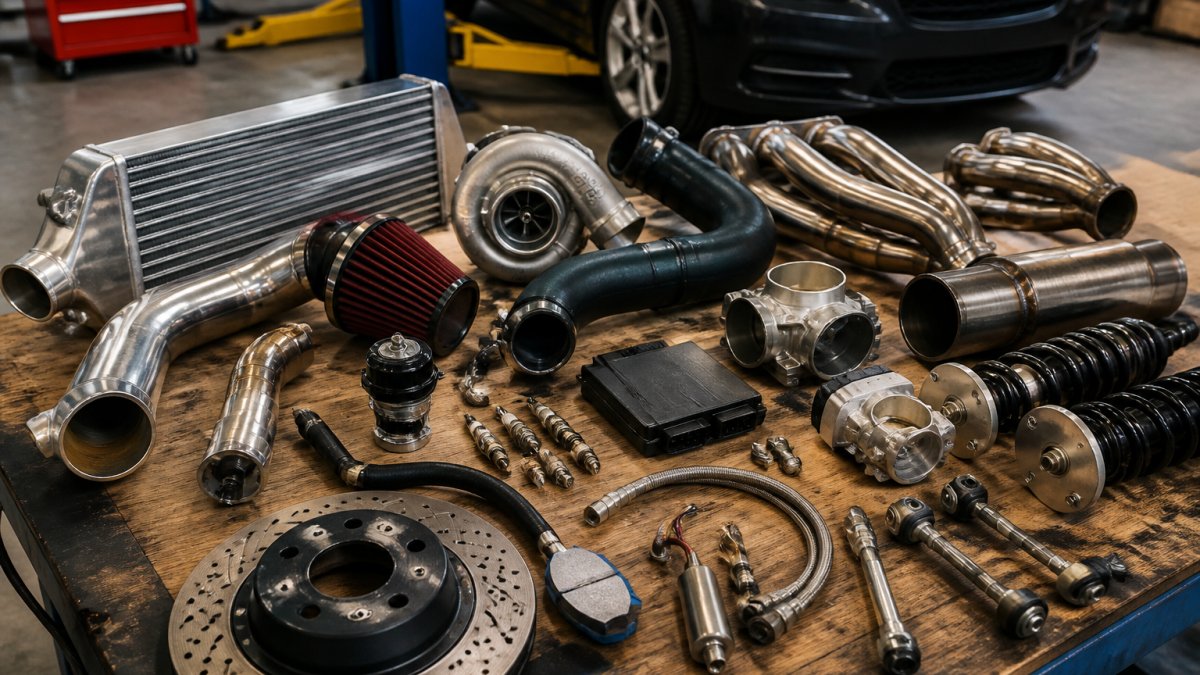
Table of Contents
- Why Performance Parts Matter and How to Start Smart
- The Best Beginner Car Mods to Build Confidence
- Cold Air Intake Pros and Cons: What You Need to Know
- Suspension Upgrades for Beginners: Handling Without the Headache
- How to Choose Performance Parts That Fit Your Car and Goals
- Realistic Costs, Legal Considerations, and Warranty Impact
- Installation Difficulty, Maintenance, and Measuring Gains
- Frequently Asked Questions
Last Updated: October 13, 2026
Why Performance Parts Matter and How to Start Smart
Automotive performance parts for beginners are the bolt-on components that improve how a car breathes, stops, handles, and puts power down, without a full engine rebuild.
The biggest mistake beginners make is buying parts by reputation instead of by goal.
The five categories below, intake, exhaust, brakes, tires, and suspension, form a logical ladder. Climb it one rung at a time and measure each change.
The Best Beginner Car Mods to Build Confidence
The best beginner car mods are intake, exhaust, brakes, tires, and suspension, in roughly that order of difficulty. Each is reversible, well documented, and teaches you how your car works.
Start with bolt-ons: basic hand tools, no ECU changes, no warranty void on their own. Save engine tuning and forced induction for later.
Intake and Exhaust: The Classic First Steps
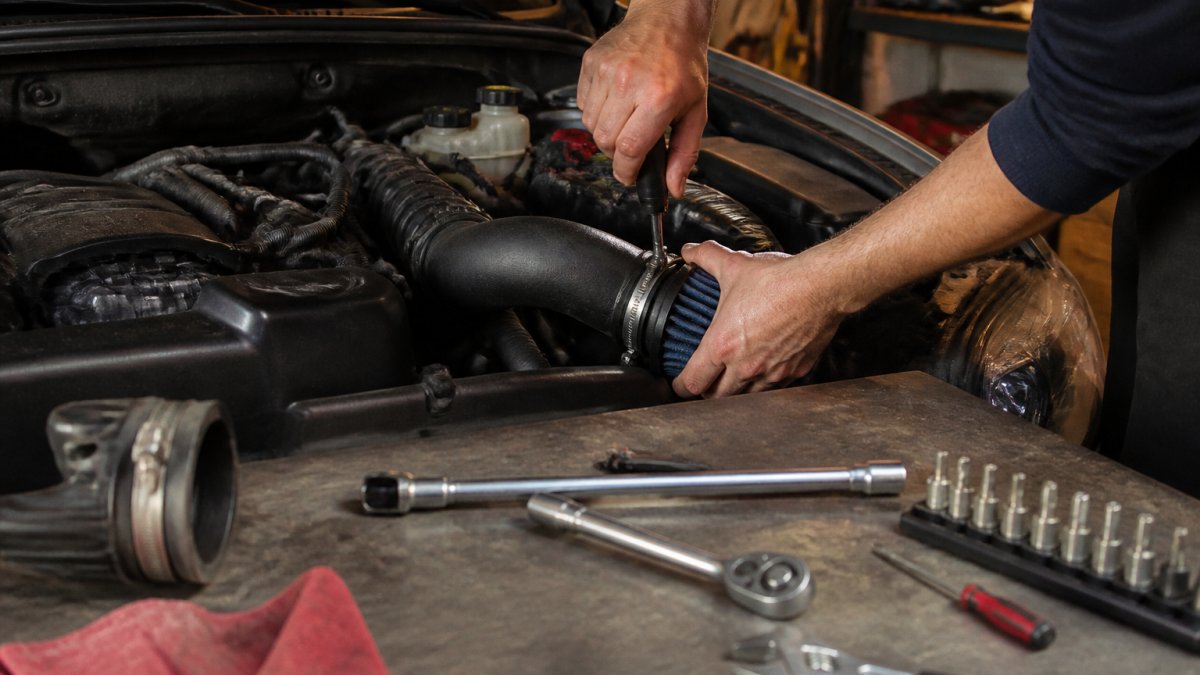
An aftermarket intake replaces the factory airbox with a freer-flowing filter and piping, sharpening throttle response and adding a modest power bump on turbocharged cars. Cat-back exhausts do the same on the exit side, cutting backpressure while changing the sound.
Expect small gains, not transformation. On the exhaust side, we carry systems like the 2017-2023 Audi R8 Titanium AFD F1 Exhaust System and the 2021-2027 BMW M3/M4 Valved RS Exhaust, which show what a well-engineered system looks like: mandrel bends, quality materials, and factory-style fitment.


Brakes and Tires: Safety Upgrades That Pay Off
Brake pads, rotors, and tires are the highest-value first upgrades on any car. Better pads resist fade under hard stops, and stickier tires shorten braking distance and lap times more than most power mods.
This is where beginners get the best return on every dollar. A tire upgrade changes grip, steering feel, and wet-weather safety at once, while higher-temperature brake pads keep you confident on a mountain road or track day.
Cold Air Intake Pros and Cons: What You Need to Know
Cold air intake pros and cons come down to airflow versus heat soak. A well-designed intake pulls cooler, denser air and improves throttle response, especially on turbo cars.
Pros: modest power gains on forced-induction engines, sharper response, better sound, easy install. Cons: minimal gains on naturally aspirated cars, potential check-engine lights if the MAF sensor is disturbed, and louder intake noise at cruise.
| Factor | Well-Designed Intake | Poorly Designed Intake |
|---|---|---|
| Air source | Sealed from engine heat | Open to hot bay air |
| Power gain | Small, real on turbos | Negligible |
| Fitment | Vehicle-specific | Universal, needs adapting |
| Sound | Refined induction note | Droning at cruise |
Suspension Upgrades for Beginners: Handling Without the Headache
Suspension upgrades for beginners should start with springs, dampers, and sway bars, not coilovers cranked to the ground. Lowering too far ruins geometry and makes daily driving miserable.
A modest drop with matched dampers sharpens turn-in and reduces body roll without wrecking ride quality. Sway bars are the sleeper upgrade, cutting body roll for little money and effort. Align the car after any suspension change, or you will eat through tires.
How to Choose Performance Parts That Fit Your Car and Goals
Choosing the right performance parts starts with three questions: what is your goal, what is your budget, and what does your car actually need? Answer those before you open a catalog, then follow a staged plan so no part fights the one you installed last month.
Stage 0: Baseline and Maintenance
Before any upgrade, bring the car to a known-good state: fresh fluids, healthy brakes, correct tire pressures, recent alignment. A worn-out car with a new intake is still a worn-out car, and this stage prevents the most wasted money.
Stage 1: Safety and Grip
Tires first, then brake pads and fluid. These give the highest return on every dollar for a beginner, are reversible, and do not touch the ECU or emissions equipment. A quality tire upgrade changes more about how a car feels than any bolt-on engine part.
Stage 2: Breathing Mods
Intake and cat-back exhaust. Modest gains, mostly on turbocharged cars, but excellent learning value: torque specs, sensor connectors, and exhaust hangers all transfer to later jobs.
Stage 3: Handling
Springs, dampers, and sway bars, installed as a matched system, with an alignment immediately after. This is where a daily driver feels genuinely sharper without becoming punishing.
Stage 4: Power and Tuning
ECU tuning, downpipes, and forced induction. Here emissions legality, warranty risk, and platform-specific dependencies collide. Do not enter until you understand your car's ECU strategy and your state's inspection rules.
Fitment, Compatibility, and Tuning Dependencies
Fitment is where beginners lose the most money. Every part is built for specific years, trims, and packages, and a part for an M Sport bumper will not fit a base model.
2017-2023 Audi R8 Titanium AFD F1 Exhaust System →
Tuning dependencies matter too: some intakes and exhausts require an ECU tune to avoid check-engine lights, and some downpipes are not street legal in every state. Ask before you buy.
A short compatibility checklist before any purchase:
- Confirm year, trim, engine code, and any factory performance packages.
- Confirm whether the part requires a tune, a sensor recalibration, or a specific fuel type.
- Confirm whether the part is emissions-legal for your state.
- Confirm whether the part is reversible if you sell the car.
Realistic Costs, Legal Considerations, and Warranty Impact
Most beginners underestimate two things: the total cost of a mod and the paperwork. A part's sticker price is only the first line item. Budget for the part, installation labor, consumables, an alignment after any suspension change, and any required ECU tuning.
These are typical ranges for common beginner upgrades, and they vary widely by platform, brand, and whether you go DIY or shop-installed:
| Upgrade | Typical Part Cost | Typical Install Labor | Notes |
|---|---|---|---|
| Panel or drop-in filter | Low hundreds | Near zero (DIY) | Cheapest entry point, minimal gain |
| Cold air intake | Low to mid hundreds | 1-2 hours shop time | Fitment-specific; MAF sensor care matters |
| Cat-back exhaust | Mid hundreds to low thousands | 2-4 hours shop time | Material (aluminized vs. stainless vs. titanium) drives price |
| Brake pads and rotors | Low to mid hundreds per axle | 2-3 hours per axle | Fluid flush recommended at the same time |
| Tires | Mid hundreds to over a thousand per set | Mount and balance per tire | Biggest single handling gain per dollar |
| Springs and dampers | Mid hundreds to low thousands | 4-6 hours plus alignment | Alignment is mandatory, not optional |
| Sway bars | Low to mid hundreds | 2-4 hours | Often the best handling value |
| ECU tune | Mid hundreds to over a thousand | 1-2 hours | Can void powertrain warranty on some platforms |
Treat these as planning ranges, not quotes. Get two or three estimates before committing, and ask whether the shop supplies the part or installs yours.
Emissions, Inspection, and Street Legality
Emissions compliance is where beginners get burned most often. Under the federal Clean Air Act, it is illegal to remove or defeat emissions control equipment on a street-driven vehicle, and many states add their own inspection programs. A part marketed as "off-road use only" is a signal, not a loophole.
Before you buy, confirm three things:
- Whether the part carries a CARB Executive Order (EO) number, which is what California and several other states require for emissions-related aftermarket parts.
- Whether your state runs a tailpipe, OBD-II, or visual inspection, because each catches different modifications.
- Whether the part is labeled for racing or off-road use only, which usually means it is not legal on a registered street car.
EPA emissions regulations is the starting point for federal rules, and your state's motor vehicle agency publishes its own inspection requirements.
Warranty Risk, Plainly Stated
A modification does not automatically void your entire warranty. Under the Magnuson-Moss Warranty Act, a dealer generally cannot deny a claim just because an aftermarket part is installed, but they can deny it if they show the part caused the failure. An intake is unlikely to affect a transmission claim; a tune that raises boost pressure is a real risk to a powertrain claim.
A few habits reduce the risk:
- Keep every receipt and part number.
- Use parts that are designed for your exact year, trim, and engine.
- Ask your dealer, in writing if possible, how a specific mod affects your coverage.
- If you lease, read the lease terms before you touch the car, because lease-end inspections are strict.
Insurance and Resale
Tell your insurer about meaningful modifications. Some carriers raise premiums, some exclude modified parts from coverage, and some will not insure a heavily modified car at all; undisclosed mods can complicate a claim. On resale, stock parts are usually worth more, so keep your factory components in boxes and revert to stock before a sale.
Installation Difficulty, Maintenance, and Measuring Gains
Installation difficulty ranges from a 30-minute bolt-on to a full-day job requiring a lift.
Maintenance matters as much as installation. Filters need cleaning, exhaust hardware needs re-torquing, and carbon fiber needs care.

Measuring gains is how you avoid wasting money. Log before-and-after data: 0-60 times, braking distance, or lap times on the same stretch of road.
- Baseline your car before any mod
- Change one part at a time
- Re-measure after each change
- Record conditions so results compare fairly
- Keep receipts and part numbers
Shop now and find the parts that fit your car and your goals.
Frequently Asked Questions
What are the best performance parts for beginners?
Start with a cold air intake and a cat-back exhaust. These are bolt-on upgrades that improve airflow and sound without major tuning. Next, consider brake pads and tires for safety. Suspension upgrades like lowering springs can follow once you're comfortable. Always verify fitment for your specific make, model, and year before buying.
Do performance parts improve horsepower or handling?
Both, depending on the part. Intakes, exhausts, and engine tuning add horsepower and torque. Suspension, tires, and brakes improve handling and stopping. A balanced approach delivers the best results. For example, adding 20 horsepower without upgrading tires may reduce traction. Plan upgrades that complement each other.
Are performance parts difficult to install?
Difficulty varies. Bolt-on parts like intakes and exhaust systems often require basic hand tools and 1-3 hours. Suspension and brake work needs jack stands, torque wrenches, and mechanical experience. If unsure, professional installation costs $100-$500 depending on the part. Always follow torque specs and use quality hardware.
How do I choose performance parts that fit my car?
Check your vehicle's year, make, model, and trim. Look for parts labeled with your exact fitment. Use a performance parts finder or consult a specialist. Verify compatibility with existing modifications, especially ECU tunes. Read return policies before ordering to avoid restocking fees on wrong-fit parts.
Can performance parts affect fuel economy or reliability?
Yes. Intakes and exhausts can slightly improve fuel economy if you drive normally, but aggressive driving reduces it. Engine tuning may require premium fuel. Reliability depends on part quality and installation. Cheap parts often fail early. Stick with reputable brands and maintain your vehicle according to the manual.
Do I need a tune after installing performance parts?
Not always. Bolt-on intakes and exhausts usually work without a tune, though a tune maximizes gains. Downpipes, larger injectors, or forced induction require a custom ECU tune to run safely. Without a tune, you risk lean conditions or check engine lights. Consult a tuner for guidance specific to your build.